.png)
Enhancing Railway Operations with Network Health Monitoring
- tapashpaul3
- Dec 29, 2025
- 4 min read
Updated: 4 days ago
The Importance of Network Health Monitoring in Railways
Railway communication networks must operate continuously without failure. Any downtime or security breach can disrupt passenger information, leading to confusion and operational delays. An NMS tailored for IPIS helps monitor network devices, detect faults, and respond to issues proactively.
Key benefits include:
Real-time monitoring: Continuous tracking of network performance and device status.
Fault detection: Immediate alerts for failures or anomalies using SNMP v3 traps.
Security: SNMP v3 provides encrypted communication, protecting sensitive data.
Compliance: Adherence to railway standards such as those set by RDSO ensures interoperability and safety.
Scalability: Supports both edge (ENMS) and central (CNMS) deployments to cover extensive railway networks.
By implementing a secure NMS, railway operators can maintain high availability of IPIS, ensuring passengers receive accurate information at all times.
Secure SNMP v3 Support for Reliable Monitoring
Simple Network Management Protocol (SNMP) is widely used for network management. However, earlier versions lacked robust security features. SNMP v3 addresses these concerns by adding authentication, encryption, and access control.
For IPIS, SNMP v3 support means:
Confidentiality: Data exchanged between network devices and the NMS is encrypted.
Integrity: Messages cannot be tampered with during transmission.
Authentication: Only authorized devices and users can access network management data.
This level of security is critical for railway networks, where unauthorized access could lead to misinformation or system failures. The NMS’s ability to fully support SNMP v3 and trap mechanisms ensures that network events are securely reported and acted upon promptly.
Edge and Central Deployment Architecture
Railway networks span large areas, often with remote stations and centralized control centers. A flexible deployment architecture for the NMS is necessary to address these conditions.
Edge Network Management System (ENMS): Installed at local stations or regional hubs, ENMS handles immediate network monitoring and fault detection close to the source. This reduces latency and allows faster response to local issues.
Central Network Management System (CNMS): Located at the central control center, CNMS aggregates data from multiple ENMS units, providing a comprehensive overview of the entire network. It supports strategic decision-making and long-term planning.
This distributed architecture enhances resilience. If one ENMS faces issues, CNMS can still maintain overall network visibility. It also aligns with railway operational models, where local autonomy and central oversight coexist.
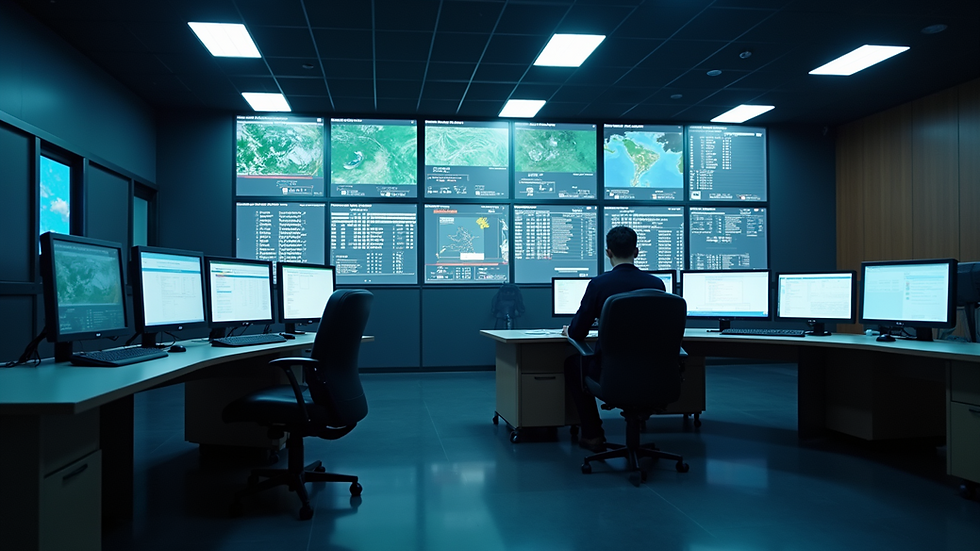
Railway control room showing network health monitoring for IPIS
Compliance with RDSO Standards
The Research Designs and Standards Organisation (RDSO) sets technical standards for Indian Railways to ensure safety, reliability, and interoperability. Any network health monitoring system used in railways must comply with these standards.
An NMS designed for IPIS that meets RDSO requirements offers:
Standardized protocols: Ensures compatibility with existing railway communication equipment.
Safety compliance: Meets safety guidelines to prevent network failures affecting critical systems.
Certification readiness: Facilitates faster approval and deployment within railway infrastructure.
Railway operators benefit from reduced risk and smoother integration when using RDSO-compliant NMS solutions.
Certified Quality with CMMI Level 5 Company
Developing and deploying a secure NMS for IPIS requires rigorous quality processes. A company certified at Capability Maturity Model Integration (CMMI) Level 5 demonstrates the highest maturity in process optimization and continuous improvement.
Benefits of working with a CMMI Level 5 certified company include:
Reliable software development: Reduced defects and higher system stability.
Efficient project management: On-time delivery and adherence to specifications.
Continuous improvement: Ongoing enhancements based on feedback and performance data.
This certification assures railway stakeholders that the NMS solution is built with quality and reliability in mind.
Practical Example: Improving Passenger Experience with Secure NMS
Consider a busy metropolitan railway network where IPIS displays real-time train arrival information. Without a secure NMS, network outages or unauthorized access could cause incorrect information to be shown, confusing passengers and causing delays.
By deploying an NMS with SNMP v3 support and a dual ENMS-CNMS architecture, the railway operator can:
Detect network faults at the station level immediately.
Securely transmit alerts to the central control room.
Quickly isolate and fix issues before they affect passenger information.
Maintain compliance with RDSO standards, ensuring system reliability.
This leads to a smoother passenger experience, fewer complaints, and improved operational efficiency.
Future Trends in Network Health Monitoring
As technology evolves, so do the needs of railway networks. Future trends in network health monitoring will likely include:
Artificial Intelligence (AI): AI can enhance fault detection and predictive maintenance. By analyzing data patterns, AI can predict potential failures before they occur.
Internet of Things (IoT): IoT devices can provide real-time data from various points in the railway network, improving monitoring capabilities.
Cloud Computing: Utilizing cloud services can enhance data storage and processing capabilities, allowing for more comprehensive network analysis.
These advancements will further strengthen the reliability and efficiency of railway operations.
Summary
A secure Network Health Monitoring System designed for Integrated Passenger Information Systems strengthens railway communication networks. Supporting SNMP v3 and trap mechanisms ensures secure, real-time monitoring. The combination of edge and central deployment architectures provides flexibility and resilience across vast railway networks. Compliance with RDSO standards and development by a CMMI Level 5 certified company guarantees quality and safety.
In conclusion, the integration of advanced monitoring systems is crucial for the future of railway operations. By prioritizing security, compliance, and innovative technologies, railway operators can enhance passenger experience and operational efficiency.


Comments